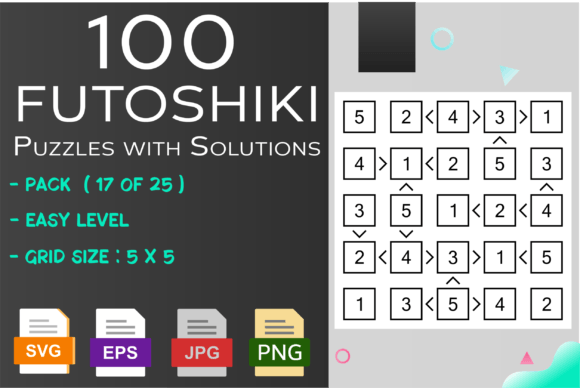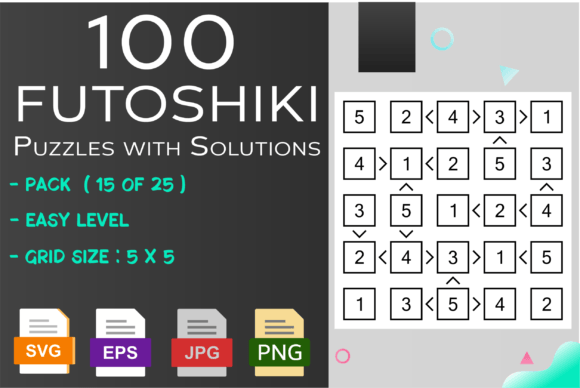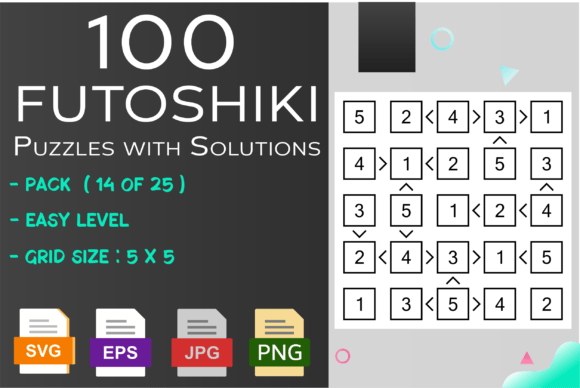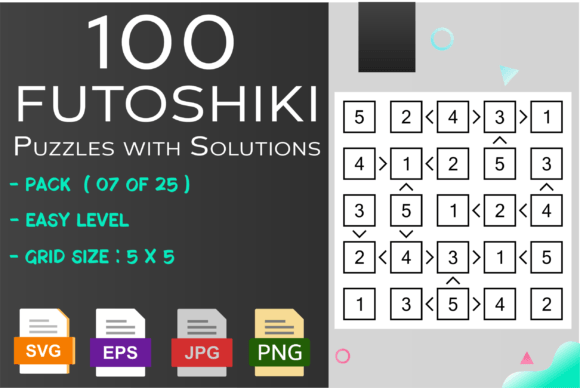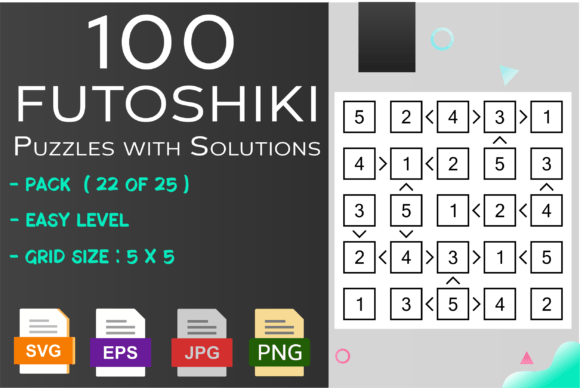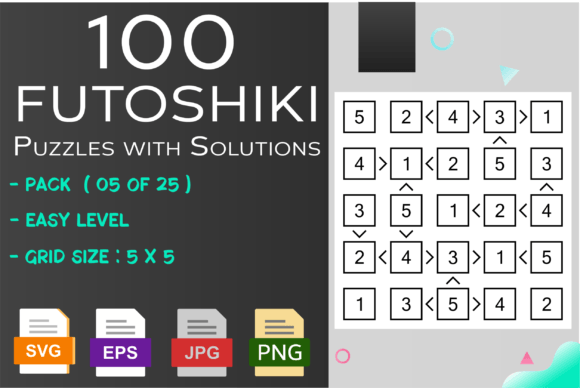
100 Futoshiki Puzzles Easy 5 of 25
A Designer’s First Glance: Clean, Clever, and Quietly Confident
When I opened 100 Futoshiki Puzzles Easy 5 of 25, I wasn’t expecting elegance—but I got it. This isn’t flashy typography or bold iconography. It’s crisp grid lines, balanced spacing, and subtle numerical hierarchy that reads like a quiet invitation to think. As an embroidery designer who regularly translates digital graphics into stitched texture, my first question is always: Will this hold up under thread? The answer, after holding it up to natural light and squinting at the corners? Yes—especially for projects where clarity matters more than ornamentation.
Real-Life Test: A Custom Embroidered Tote for a Local Bookstore Pop-Up
Last week, I used 100 Futoshiki Puzzles Easy 5 of 25 as the central motif on a linen-cotton tote bag for a neighborhood indie bookstore’s “Brainy Summer” launch. We paired it with minimalist sans-serif text below (“Solve One. Sip Two.”) and kept the stitch count lean. The result? A design that looked sharp at arm’s length but also held its own up close—no fuzzy edges, no collapsed grids, no numbers bleeding into one another. Customers paused. They traced the inequality symbols with their fingers. That’s rare—and valuable—for a handmade product meant to spark conversation, not just carry groceries.
Where It Shines (and Where It Needs Care)
100 Futoshiki Puzzles Easy 5 of 25 works beautifully on medium-weight woven fabrics: tea towels, aprons, pillow covers, and structured totes. Its clean geometry translates well to satin stitch borders and precise fill-stitch grids—ideal for sweatshirt embroidery when scaled to 3.5–4 inches wide. It’s also surprisingly effective on baby onesies, provided you use a lightweight stabilizer and reduce density slightly to avoid stiffness.
But be thoughtful with placement. On curved surfaces like caps or stretchy knit t-shirts, test the grid alignment first—uneven tension can warp the puzzle’s symmetry. Avoid dense fill areas on thin fabrics (like lightweight cotton voile) without tear-away backing; small inequality symbols (<, >) may lose definition if thread density isn’t dialed in. And on dark fabric? Confirm your thread colors have enough contrast—light gray or cream works better than pale yellow for legibility.
Design Assets That Build Trust—Not Just Decoration
What sets 100 Futoshiki Puzzles Easy 5 of 25 apart from generic puzzle graphics is its consistency. All 100 puzzles share the same line weight, corner radius, and number sizing. That uniformity makes it feel intentional—not assembled. For Etsy sellers and small shop owners, that means stronger brand consistency across listings, printable mockups, and physical products. When customers see this design on a kitchen towel, then later on a patch or holiday gift card sleeve, they recognize the voice. That builds trust faster than any tagline.
It also elevates perceived value. Unlike busy clipart-style graphics, this feels like a curated design asset—not filler. Buyers of personalized gifts respond to that subtlety. A teacher ordering embroidered pencil cases for her math club didn’t just want “a puzzle”—she wanted something that looked like it belonged in a classroom display. 100 Futoshiki Puzzles Easy 5 of 25 delivered that quiet professionalism.
Practical Notes Every Embroidery Designer Should Check
- Always test on scrap fabric first—especially with textured weaves like burlap or basketweave tea towels. Grid lines can disappear in heavy texture.
- Review stitch density before sending to machine. High-density fills may overwhelm delicate fabrics or obscure fine inequality symbols.
- Confirm hoop size compatibility. If your smallest hoop is 4x4”, scale accordingly—don’t force a 5-inch version into tight space.
- Inspect small details: the “less than” and “greater than” signs are tiny. Zoom in digitally and stitch a sample to verify they don’t collapse.
- Test black-and-white mockups to assess contrast before choosing thread colors—what looks fine on screen may vanish on navy denim.
- Use appropriate stabilizer: cut-away for knits, tear-away for stable wovens, and lightweight fusible for baby items.
- Verify licensing before selling finished products or bundling 100 Futoshiki Puzzles Easy 5 of 25 into digital embroidery kits—this is a Graphics asset from Kdp Interiors, intended for commercial use, but terms vary by seller.
More Than a Puzzle—A Thoughtful Design Choice
I’ve used dozens of KDP puzzle collections over the years—some overloaded, some too sparse, many visually inconsistent. 100 Futoshiki Puzzles Easy 5 of 25 stands out because it respects the craft. It doesn’t shout. It doesn’t overcomplicate. It gives space to the stitch, the fabric, and the person holding the finished item. Whether you’re stitching a boutique apron for a puzzle café, designing a holiday embroidery kit for craft fairs, or building a cohesive line of educational baby items, this design supports your intention instead of competing with it.
For embroidery designers, it’s a reliable anchor. For Etsy sellers, it’s a quietly sophisticated differentiator. For creative entrepreneurs, it’s proof that smart design doesn’t need to be loud to be memorable.