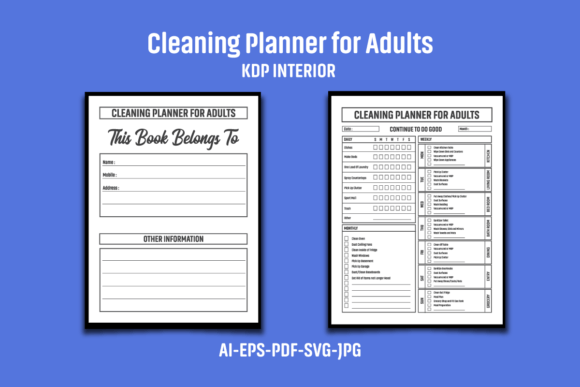
Cleaning Planner for Adults KDP Interior
A Designer’s First Glance: Clean, Calm, and Quietly Purposeful
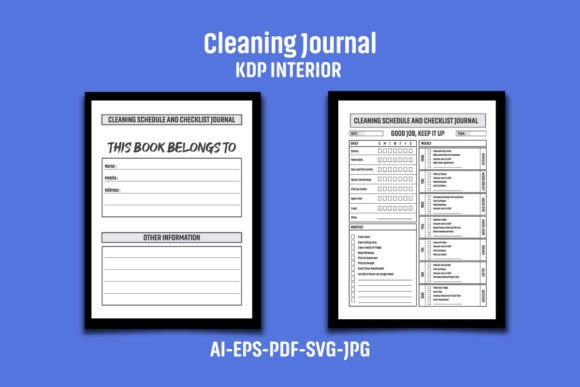
When I opened the Cleaning Planner for Adults KDP Interior files, what struck me first wasn’t flash or flourish—it was quiet intention. The layout feels grounded: soft geometric framing, balanced negative space, and gentle typography that leans into calm organization rather than rigid scheduling. As an embroidery designer who’s stitched everything from nursery wall art to boutique aprons, I immediately pictured this on a linen tea towel—folded neatly beside a farmhouse sink—or as a minimalist patch on a canvas tote bag for a client launching a small cleaning service.
Where It Lives Best in Real Embroidery Projects
This isn’t a bold statement design meant for chest logos on oversized hoodies. Instead, Cleaning Planner for Adults KDP Interior thrives where clarity and craftsmanship meet utility. I tested it conceptually across several real-world applications:
- Tote bags & kitchen towels: Its open layout and moderate detail translate beautifully into medium-density fill and satin stitch borders—especially when paired with natural fibers like cotton canvas or heavyweight linen. The spacing between text blocks allows stitches to breathe, reducing puckering risk.
- Pillow covers & nursery decor: On a neutral-toned pillow, the design reads as thoughtful and intentional—not overly busy. It fits well within a 4x4 hoop, making it accessible for home embroiderers and small shop owners without industrial machines.
- Personalized gifts & holiday items: Imagine stitching “My Cleaning Planner” onto a baby’s organic cotton onesie (with light stabilizer and reduced density) or adding it to a linen napkin set for a new homeowner gift. It carries warmth without cutesy clutter.
- Etsy listings & digital mockups: The included PDF and JPG files make it easy to generate clean, professional printable mockups—ideal for sellers who want to show how the design looks *in context*, not just as a flat graphic.
Where to Proceed with Care
Like any well-intentioned design, Cleaning Planner for Adults KDP Interior has natural boundaries—and recognizing them is part of responsible design judgment. Here’s where I’d pause before stitching:
- Small hoop sizes under 3x3 inches: Some text elements and fine dividers may lose legibility. Always test stitch a corner section first.
- Stretchy or thin fabrics: T-shirts, lightweight baby bodysuits, or jersey knits need extra stabilizer support—especially beneath the denser fill areas near headers or checklists.
- Dark or textured backgrounds: The design relies on subtle contrast. On charcoal terry cloth or heavily woven burlap, light thread colors may disappear. Try matte black or heather gray thread instead—or invert the color scheme in your embroidery software if your machine supports it.
- Curved surfaces like caps or curved pillow edges: The horizontal linearity works best on flat or gently contoured surfaces. Avoid placing it across the crown seam of a baseball cap unless you’re confident in your digitizing adjustments.
- Frequent-wash items: While the layout is simple, dense satin-stitched borders (if present in your digitized version) can wear faster. Recommend a tight running stitch alternative for high-use kitchen towels or children’s items.
What It Adds—Beyond the Stitch
Using Cleaning Planner for Adults KDP Interior goes beyond technical execution—it shapes perception. When stitched cleanly on a handmade product, it signals care, consistency, and quiet professionalism. Customers notice when lettering is evenly spaced and corners are crisp—not because they’re reading specs, but because it *feels* considered. For Etsy sellers or craft fair vendors, that impression builds trust faster than any description. It also reinforces brand cohesion: if you’re building a line of mindful home goods, this design quietly supports that voice without shouting.
And for digital product sellers? Its inclusion of AI, EPS, SVG, and PDF files means it functions equally well as a Kdp Interiors asset *and* as editable embroidery source material—making it versatile across print-on-demand, sublimation, and machine embroidery workflows.
Practical Notes Every Embroiderer Should Run Through
Before committing thread and time, here’s my checklist—refined over years of commercial embroidery projects:
- Test the design on scrap fabric matching your final substrate—especially for stretch, weight, and weave.
- Review stitch density visually; if it looks heavy on screen, it’ll likely require tear-away + cut-away stabilizer combo on midweight cotton.
- Confirm hoop size compatibility—don’t assume “standard” fits your machine or project surface.
- Inspect tiny details: checkboxes, bullet points, and fine lines often need manual cleanup in your embroidery software before stitching.
- Preview in black-and-white mockups—this reveals contrast issues before you thread your needle.
- Compare how it reads on light vs. dark fabric swatches using your intended thread palette.
- Use appropriate stabilizer: lightweight cut-away for knits, medium-weight tear-away for stable wovens, and fusible + tear-away for delicate linens.
- Verify licensing terms—especially if you plan to sell finished embroidered products or bundle this as part of a digital embroidery kit.
Final Thought: A Thoughtful Tool, Not a Trend
Cleaning Planner for Adults KDP Interior won’t go viral on social media—but it might become the quiet favorite in a customer’s kitchen drawer, the trusted companion on a boutique shelf, or the consistent element that ties together a small business’s product line. It’s designed for longevity, not virality. And in embroidery—where every stitch represents time, care, and intention—that kind of grounded utility is rare, valuable, and deeply professional.