Log Book Templates: Graphics for KDP Interiors
As a brand designer who’s built visual systems for over 200 small businesses—and a content marketer who’s launched campaigns across Instagram, Pinterest, email, and Amazon—I opened Log Book Templates expecting utility. What I found was something sharper: a quietly versatile graphic design asset that bridges function and feeling. It landed in my inbox as part of a broader KDP Interiors bundle, but its value extends far beyond print-on-demand interiors. This isn’t just filler—it’s a creative design tool with real branding leverage.
First Impression: Warm, Organized, Human-Centered
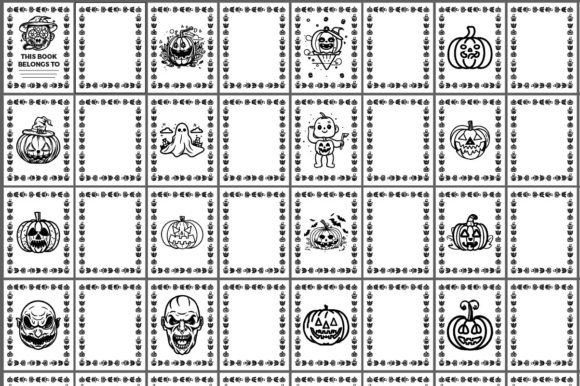
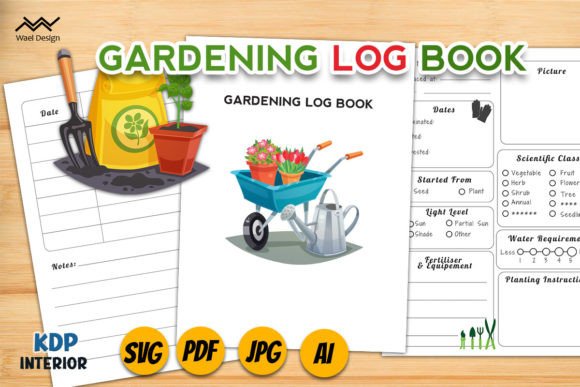
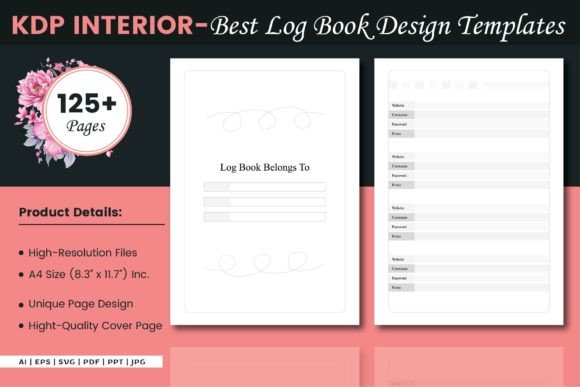
The moment you preview the 100 high-resolution interiors, the tone is clear: grounded, intentional, and quietly confident. No loud gradients or forced trends—just clean lines, balanced margins, and thoughtful spacing. The mood leans into lifestyle content and small business branding, not corporate austerity or hyper-minimalism. It feels like the kind of log book you’d hand to a yoga instructor launching a 30-day challenge, a coffee roaster documenting seasonal batches, or an online coach guiding clients through habit tracking. That emotional resonance—trustworthy, approachable, capable—is rare in mass-produced digital product assets.
Where Log Book Templates Builds Brand Identity (Without Saying a Word)
Branding isn’t only about logos. It’s about consistency in texture, rhythm, and visual language—and Log Book Templates delivers that across touchpoints. In a recent campaign for a sustainable stationery brand, we used three interior layouts as the backbone for: Instagram carousel posts (tracking customer journey milestones), Pinterest pins (showcasing “how to use your planner” tutorials), and email banners (introducing a new seasonal journal line). Because each template shares the same grid logic, typography spacing, and margin discipline, the entire campaign felt unified—even though no logo appeared in half the visuals.
This matters for audience trust. When your marketing visuals speak the same visual dialect across platforms, people subconsciously register coherence—and coherence signals professionalism.
Real-World Marketing Uses That Actually Work
- Social media graphics: Perfect for Reels thumbnails, Story templates, and feed posts where structure supports scannability—especially for coaching, wellness, and education creators.
- Packaging design & inserts: Print one interior as a branded thank-you card inside subscription boxes; the editable vector files let you add custom copy and brand colors without pixelation.
- Lead magnets & content bundles: Bundle 5–7 log pages as a free “Goal Tracker Starter Kit”—it feels more valuable than a single PDF because it’s modular and printable.
- Digital ads: Use cropped sections as background textures behind bold headlines in Facebook or Google Display ads—adds depth without competing with the message.
- Editorial design: Bloggers and newsletter writers insert them as visual breaks between long-form sections—ideal for “reflection prompts,” “action steps,” or “progress checkpoints.”
What Log Book Templates Does *Not* Do (And Why That’s Strategic)
It won’t replace your logo design. It won’t solve dense information hierarchy for technical documentation. And it’s not optimized for ultra-minimalist brands that rely on negative space and monochrome palettes. If your visual identity is built around stark contrast and razor-thin fonts, these interiors may feel “too generous” with white space and line weight.
Use carefully in: text-heavy ads (the grid can distract from short-copy urgency), small mobile graphics (some icons and dividers lose clarity under 300px width), and low-contrast backgrounds (test all elements in grayscale—some subtle shading disappears).
Brand Designer Notes You Can’t Skip
Before dropping Log Book Templates into your next campaign, do this:
- Test it against your brand color palette—swap the default greys for your primary and secondary hues using the editable AI/EPS files.
- Check black-and-white usage: Print a sample page on uncoated paper—does the line weight hold? Does spacing stay legible?
- Drop it into real mockups: Paste one interior into a Canva template for an Instagram post, then view it on an iPhone screen—does alignment feel tight or loose?
- Pair it with your fonts: Try serif (e.g., Playfair), sans serif (e.g., Inter), script (e.g., Pacifico), and display fonts (e.g., Bebas Neue)—note which combinations elevate vs. clash with the layout’s rhythm.
- Confirm commercial licensing: Since these are design assets intended for resale (e.g., as part of a KDP interior or digital product), verify the license permits client work, paid ads, and bundled offerings—no surprises at launch.
Why This Fits Creative Entrepreneurs Better Than Generic Clipart
Most clipart and SVG design packs scream “stock.” They’re isolated, context-free, and demand heavy customization to feel owned. Log Book Templates arrives pre-structured—not as decoration, but as infrastructure. It assumes intention. It invites participation. That makes it ideal for content marketers building reusable systems, online coaches scaling their signature frameworks, and digital sellers differentiating their printable design offerings in a crowded creative marketplace.
In a world where attention is fractured and visual fatigue is real, Log Book Templates doesn’t shout. It steadies. It organizes. And in doing so, it becomes a silent partner in stronger visual hierarchy, clearer messaging, and more memorable campaign visuals.
Final Take: A Design Asset That Scales With Your Brand
If you're evaluating Log Book Templates for your next project—whether it’s refreshing your social media covers, designing product label inserts, or building a content marketing kit—you’re not just buying pages. You’re investing in a flexible, field-tested modern design system that supports professional branding without demanding expert-level production time. It’s not flashy—but in the right hands, it’s foundational.