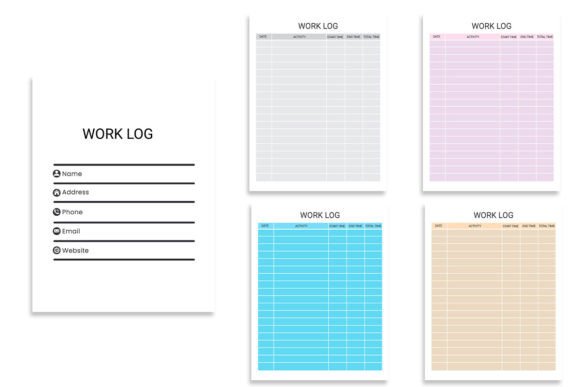
Work Log Tracker
A Designer’s First Look: Clean, Calm, and Purposeful
When I opened Work Log Tracker for the first time, my instinct was to zoom in—not for flaws, but to feel its rhythm. It’s not flashy or ornamental. Instead, it carries a quiet confidence: balanced spacing, uncluttered letterforms, and a layout that breathes. As an embroidery designer who’s stitched everything from nursery name tags to boutique aprons, I immediately sensed this wasn’t made for maximalist statement pieces—it’s built for clarity, repetition, and daily use. The theme is functional, yes—but the execution leans into warmth, not cold utility. That subtle shift matters when you’re embroidering something meant to be held, gifted, or worn.
Real-World Test: Stitching It on a Linen Tea Towel for a Small Shop Launch
Last week, I used Work Log Tracker on a batch of heavyweight linen tea towels for a local maker’s kitchen goods line. No appliqué, no dense fills—just crisp satin-stitched outlines and light fill stitch for the date boxes. Why this combo? Because the design’s strength lies in legibility at modest scale, not decorative density. On the towel, it landed perfectly: professional enough for a boutique shelf, friendly enough for a handmade gift. Customers noticed it right away—not as “cute,” but as *thoughtful*. One even asked if it came with a matching journal. That’s the signal: Work Log Tracker doesn’t just decorate; it invites interaction.
Where It Shines (and Where It Needs Care)
Work Log Tracker excels in projects where function meets tactility:
- Custom apparel: Works cleanly on crewneck sweatshirts and structured tote bags—especially when placed on the chest or lower front panel.
- Personalized gifts: Embroidered onto baby onesies (with simplified sizing) or pillow covers for home offices adds grounded charm without overwhelming delicate fabric.
- Small shop merchandise: Ideal for Etsy sellers offering “maker kits” or craft fair bundles—pair it with blank notebooks or printable planners for cohesive branding.
- Holiday and wedding gifts: Stitches beautifully on cotton napkins or linen pouches—subtle, useful, and quietly sentimental.
But here’s where attention matters: Work Log Tracker includes fine-lined elements and tight kerning in the date fields. On stretchy knits or thin jersey tees, those details can blur without proper stabilizer and moderate stitch density. Curved surfaces—like caps or curved apron pockets—require careful hooping and possibly slight manual repositioning to keep alignment crisp. And on dark fabric? Always test thread color contrast first. A soft charcoal gray thread may read as elegant on ivory linen but vanish on navy twill.
Design Integrity in Motion: What You’re Really Buying
This isn’t just a graphics file—it’s a design asset with behavior. As a machine embroidery designer, I assess how a pattern holds up across contexts: Does it retain personality when scaled down to 3 inches? Does it translate well in black-and-white mockups for digital listings? Does it look intentional—not automated—when stitched? Work Log Tracker passes these quietly. Its proportions stay harmonious even at 2.5”, and the clean vector foundation (AI files included) means you can adapt stroke weight or spacing without pixelation. That flexibility is gold for craft businesses juggling custom requests and inventory batches.
Practical Notes Every Embroiderer Should Check Before Stitching
Before committing to your first run, take these five minutes:
- Test on scrap fabric—same weight and weave as your final product. Watch how corners hold, how small numbers register, and whether the stitch density feels balanced (not too sparse, not overly dense).
- Review thread color contrast against both light and dark backgrounds. Try matte cotton threads for a softer finish on baby items; go for high-sheen polyester on tote bags for durability and pop.
- Confirm hoop size compatibility. If you’re using a 4x4 hoop, check whether the full design fits—or whether cropping or repositioning is needed for key elements like the header or date grid.
- Inspect tiny details under magnification: Are inner corners sharp? Do overlapping strokes create unintended buildup? These matter most on textured fabrics like terry cloth or bouclé.
- Verify licensing. Since Work Log Tracker is listed under Kdp Interiors and categorized as Graphics, confirm whether it permits commercial use for finished embroidered products—and whether resale of the digital embroidery file itself is allowed. When in doubt, reach out to the seller directly.
Final Thought: A Quietly Powerful Tool for Makers Who Value Clarity
Work Log Tracker won’t shout from a crowded Etsy page—but it will earn repeat buyers. It fits naturally into workflows where intentionality matters: the small business owner tracking production deadlines, the crafter gifting a personalized kitchen essential, the apparel decorator building a capsule collection around “tools for making.” It doesn’t try to be everything. It’s focused, adaptable, and respectful of both the machine and the hand guiding it. For designers who stitch with purpose—not just pattern—Work Log Tracker isn’t just another embroidery file. It’s a reliable collaborator.